
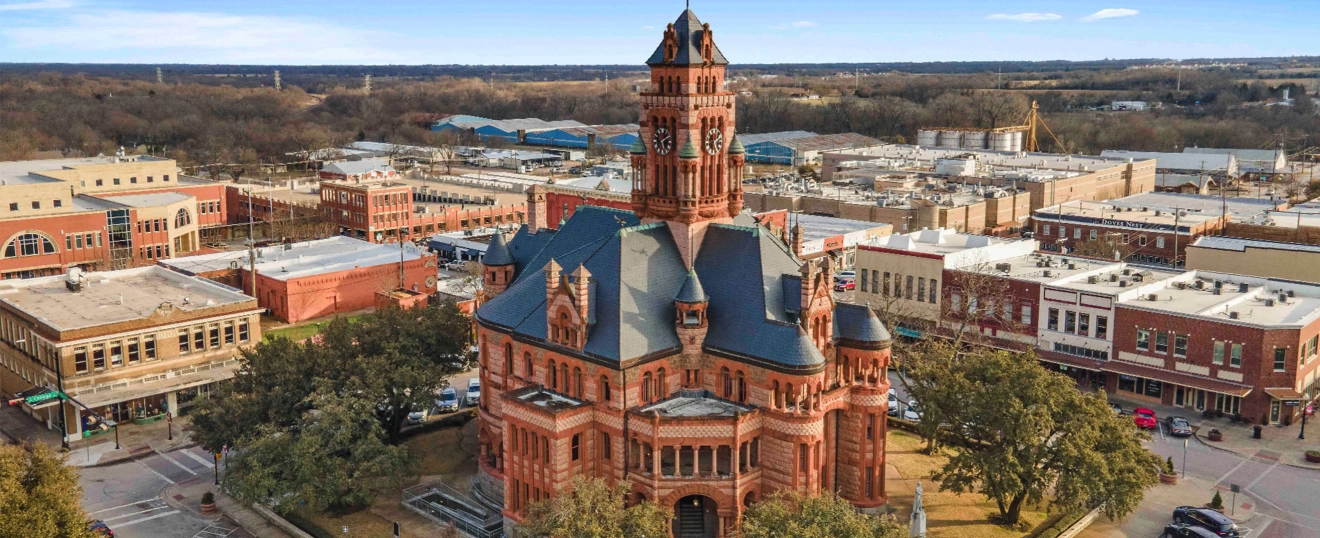
Growth brings opportunity, but it also introduces new challenges that many organizations don't anticipate until they begin affecting daily operations. Across Ellis County, businesses are expanding, communities are growing, and technology is playing an increasingly important role in supporting that growth. From network infrastructure and cybersecurity to workforce mobility and facility expansion, successful organizations are learning that technology is no longer just a utility. It's a critical part of long-term business planning.
Growth is often viewed as a positive problem to have.
New customers, additional employees, expanded facilities, and increasing demand are challenges that most business owners would gladly accept. Throughout Ellis County, we've seen communities continue attracting families, businesses, and investment at a remarkable pace. Whether it's a manufacturer expanding operations, a healthcare practice adding locations, a professional services firm hiring new employees, or a retailer opening additional space, growth continues to shape the future of our region.
What often surprises organizations is how quickly technology becomes part of that conversation.
Many businesses begin with technology infrastructure that fits their needs perfectly. The internet connection is reliable, the wireless network works well, employees have access to the systems they need, and day-to-day operations run smoothly. Then growth happens.
A few more employees are added. Additional devices appear on the network. More applications move to the cloud. Business processes become more complex. New locations, new customers, and new operational demands are introduced.
Suddenly, technology that once felt more than adequate starts showing signs of strain.
Technology Often Lags Behind Growth
One of the most common challenges growing businesses face is that technology rarely scales automatically.
A network designed for a small team may struggle to support a much larger workforce. A wireless system that once delivered excellent performance can begin to show coverage or capacity limitations as more devices connect throughout the day. Applications that worked well for a smaller operation may start exposing inefficiencies as workloads increase and business processes evolve.
The technology itself is not necessarily failing.
More often, it is simply being asked to support requirements that didn't exist when it was originally implemented.
We've seen this across a variety of industries throughout Ellis County. Healthcare providers are increasingly reliant on cloud-based platforms and mobile devices. Manufacturers depend on connectivity throughout facilities that continue to expand. Professional services firms rely on collaboration tools, remote access, and secure communications. Retail businesses are supporting payment systems, inventory platforms, guest networks, and customer-facing technologies that are all connected to the same infrastructure.
As businesses grow, technology rarely stays static.
Connectivity Has Become Critical Infrastructure
Years ago, losing internet access was viewed primarily as an inconvenience.
Today, it can bring operations to a near standstill.
Email, cloud applications, VoIP phone systems, payment processing, scheduling software, collaboration platforms, security systems, and customer communications all depend on reliable connectivity. For many organizations, the network has become as important to daily operations as electricity or water.
This shift has changed the way businesses should think about infrastructure.
Wireless coverage is no longer just about convenience. Network reliability is no longer just an IT concern. Structured cabling, internet redundancy, wireless design, and network security all have direct impacts on employee productivity and customer experience.
As organizations grow, the importance of these systems grows with them.
The challenge is that technology infrastructure often remains out of sight until something stops working.
Growth Creates New Security Challenges
Technology growth and business growth typically happen together.
More employees need access to systems. More devices connect to the network. Additional software platforms are deployed. More customer information is stored and shared. New vendors become involved in daily operations.
Each of these changes represents opportunity.
Each also creates new considerations from a cybersecurity perspective.
Organizations that once operated with a handful of users may suddenly find themselves managing dozens of accounts, multiple cloud platforms, remote workers, mobile devices, and increasingly complex business processes. Security practices that worked for a smaller organization may require adjustment as the business matures.
This doesn't mean growth is dangerous.
It simply means security should evolve alongside the organization rather than being treated as an afterthought.
Some of the most successful businesses view cybersecurity as part of operational planning rather than a separate technology initiative. They recognize that protecting customer information, maintaining business continuity, and supporting employee productivity are all connected.
The Challenge of Planning During Rapid Growth
One of the interesting realities of growth is that it often leaves very little time for planning.
Business owners are focused on hiring employees, serving customers, managing finances, and pursuing opportunities. Technology planning frequently falls lower on the priority list because everything appears to be working well enough for the moment.
The problem is that many technology issues become significantly more expensive once they turn into operational problems.
A network upgrade is easier to plan proactively than it is to rush through after performance issues begin affecting employees. Cybersecurity improvements are easier to implement before an incident occurs. Infrastructure decisions are easier to make during construction or expansion than after walls are closed and facilities are occupied.
Organizations that plan ahead often find themselves making better technology investments because those investments are aligned with future goals rather than immediate emergencies.
Growth Creates Opportunity
The good news is that growth creates opportunities just as quickly as it creates challenges.
Businesses have access to technology capabilities today that would have been difficult or cost-prohibitive only a few years ago. Cloud platforms allow organizations to scale more efficiently. Modern networking solutions provide greater visibility and performance. Cybersecurity tools help reduce business risk. Collaboration platforms make it easier for teams to work together regardless of location.
The organizations that see the greatest benefit are typically the ones that view technology as part of their growth strategy rather than simply another operational expense.
They ask different questions.
Instead of asking what technology will cost, they ask how technology can support the business they are becoming.
Looking Ahead
Ellis County continues to be one of the most exciting regions in North Texas. Communities such as Waxahachie, Midlothian, Red Oak, Ennis, Ovilla, Ferris, and Maypearl continue attracting investment, development, and new opportunities for businesses of every size.
That growth is creating tremendous momentum throughout the region.
It's also creating a need for thoughtful technology planning.
At Iron Beacon Technologies, we've found that the organizations most successful at managing growth are rarely the ones with the most technology. Instead, they're the ones with technology that has been intentionally aligned with their people, processes, and goals.
Technology should support growth, not become a barrier to it.
As Ellis County continues to evolve, businesses that treat technology as part of their long-term strategy will often be better positioned to serve customers, support employees, and capitalize on the opportunities ahead.
We proudly serve Waxahachie, Midlothian, Maypearl, Red Oak, Ovilla, Ennis, Ferris, Cedar Hill, Duncanville, DeSoto, Mansfield, Grand Prairie, Arlington, Oak Cliff, Bishop Arts District, Downtown Dallas, Uptown Dallas, Fort Worth, Burleson, Venus, Alvarado, Granbury, Hillsboro, Stephenville, Glen Rose, Foreston, Italy, Whitney, Hamilton, Dublin, Cleburne, Weatherford, and surrounding North Texas communities.
Similar Articles


The Iron Beacon Team